




SEO vs Digital Marketing: Key Differences Explained
Understand the key differences between SEO and Digital Marketing. Simple explanation, examples, benefits, and a beginner-friendly comparison guide.
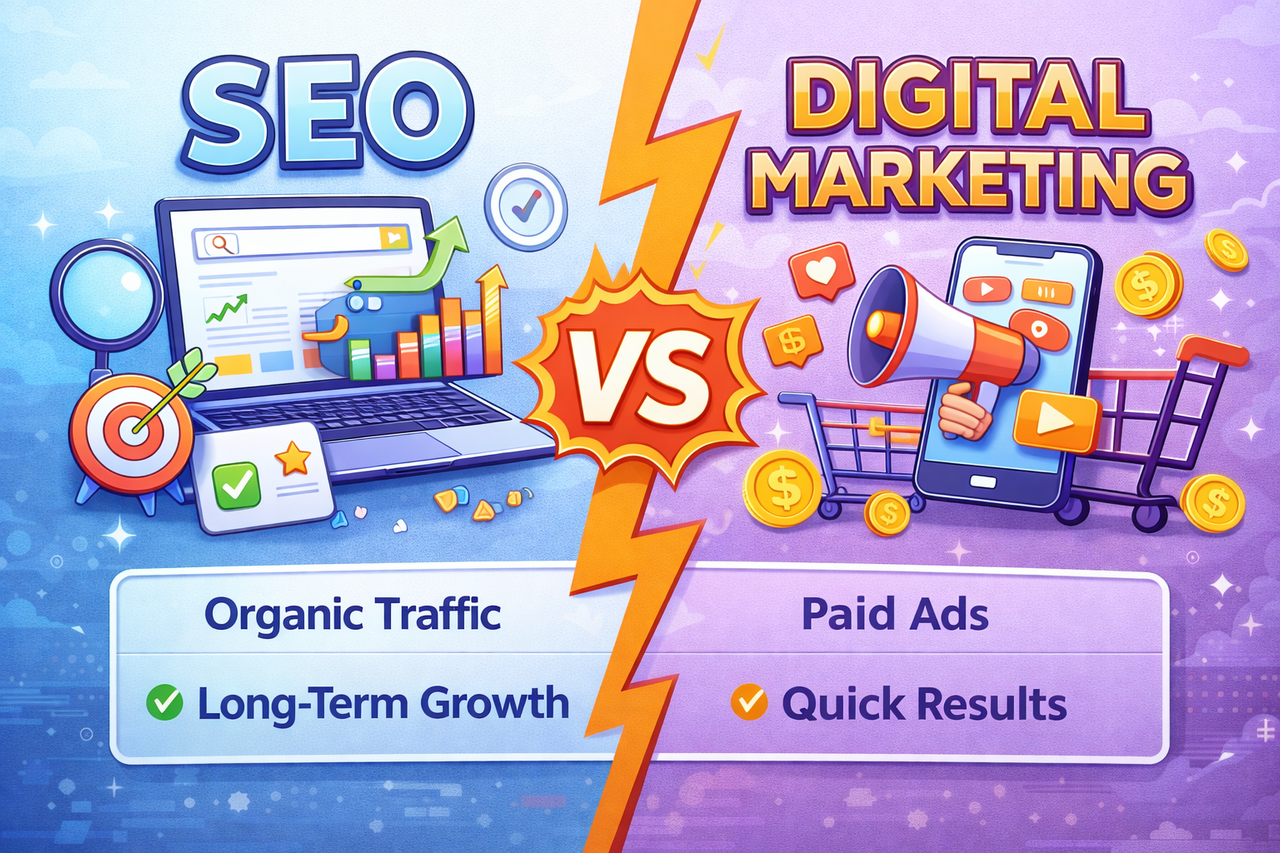
SEO vs Digital Marketing Differences
Introduction
People often get confused between SEO and digital marketing, thinking both are the same.
But the reality is: SEO is just a part of digital marketing, not the entire thing.
Both play a big role in online growth, but they work differently and have different goals.
This guide explains SEO vs Digital Marketing in simple words with clear examples, comparisons, and use cases.
By the end, you will understand exactly how each one works and which one is better for your business or career.
Table of Contents
-
What Is SEO?
-
What Is Digital Marketing?
-
SEO vs Digital Marketing: Key Differences
-
Types of SEO
-
Types of Digital Marketing
-
SEO vs Digital Marketing: Which Is Better?
-
Where SEO Works Best
-
Where Digital Marketing Works Best
-
Skills Required for SEO & Digital Marketing
-
Key Takeaways
-
FAQs
-
Conclusion
1. What Is SEO?
SEO stands for Search Engine Optimization.
It means improving your website so it ranks higher on search engines like Google.
The goal of SEO is to bring free, organic, and consistent traffic.
How SEO Works
-
Using keywords
-
Creating high-quality content
-
Improving site speed
-
Optimizing mobile experience
-
Building backlinks
SEO Example
If someone searches “best gaming laptop,” and your blog ranks on page 1, you get free traffic.
This is the power of SEO.
2. What Is Digital Marketing?
Digital marketing means promoting products or services online through different platforms.
It includes SEO but also covers many other methods like paid ads, social media, and email marketing.
How Digital Marketing Works
-
Create online presence
-
Attract users through different channels
-
Convert users into customers
-
Build long-term brand value
Digital Marketing Example
Running Instagram ads to promote a product or using email marketing to boost sales.
3. SEO vs Digital Marketing: Key Differences
SEO and digital marketing work together, but they are not the same.
Here is a simple and clear comparison.
1. Scope
-
SEO focuses only on ranking in search engines.
-
Digital Marketing covers SEO + social media + ads + email + branding.
2. Traffic Type
-
SEO: Organic (free) traffic
-
Digital Marketing: Organic + paid traffic
3. Timeframe
-
SEO: Slow but long-lasting results
-
Digital Marketing: Fast results, especially with ads
4. Investment
-
SEO: Low investment
-
Digital Marketing: Medium to high depending on ads
5. Skills
-
SEO: Keyword research, content optimization, backlinks
-
Digital Marketing: SEO + social media + ads + branding + funnels
Comparison Table: SEO vs Digital Marketing
| Feature | SEO | Digital Marketing |
|---|---|---|
| Focus | Ranking on Google | Overall online promotion |
| Traffic | Organic | Organic + Paid |
| Cost | Low | Medium–High |
| Speed | Slow | Fast |
| Skills | SEO specific | Broader marketing |
| Best For | Long-term traffic | Sales, awareness, fast results |
4. Types of SEO
4.1 On-Page SEO
Optimizing content within the website.
Includes
-
Titles & meta descriptions
-
Keywords
-
Internal links
-
Images
-
Content structure
4.2 Off-Page SEO
Improving website authority.
Includes
-
Backlinks
-
Guest posts
-
Social signals
-
Brand mentions
4.3 Technical SEO
Improving website performance.
Includes
-
Sitemap
-
Robots.txt
-
Page speed
-
Mobile optimization
-
Site structure
5. Types of Digital Marketing
5.1 Social Media Marketing
Promoting on Instagram, Facebook, YouTube, etc.
5.2 Content Marketing
Blogs, videos, eBooks, infographics.
5.3 Email Marketing
Sending newsletters and automated email sequences.
5.4 Paid Advertising
Google Ads, Facebook Ads, Instagram Ads.
5.5 Influencer Marketing
Promotions through influencers.
5.6 Affiliate Marketing
Promoting others’ products to earn commission.
6. SEO vs Digital Marketing — Which Is Better?
SEO is better for long-term traffic and organic growth.
Digital marketing is better when you want fast sales, leads, or brand awareness.
Both should ideally be used together for maximum results.
Example
A new eCommerce website:
-
Use SEO to build long-term traffic.
-
Use Ads to get fast sales.
Together, the results multiply.
7. Where SEO Works Best
SEO is perfect for businesses that want long-lasting results.
Best Use Cases
-
Blogs
-
News websites
-
Affiliate websites
-
Service pages
-
Niche websites
Why SEO Works
Because organic traffic continues for years with no extra cost.
8. Where Digital Marketing Works Best
Digital marketing is best when you want quick results or instant visibility.
Best Use Cases
-
New product launches
-
Ecommerce stores
-
Local businesses
-
Coaching programs
-
Brand building campaigns
Digital Marketing Advantage
You can target a specific audience immediately.
9. Skills Required for SEO & Digital Marketing
SEO Skills
-
Keyword research
-
On-page optimization
-
Backlink building
-
Basic content writing
-
Google Search Console
-
Technical SEO basics
Digital Marketing Skills
-
Content creation
-
Social media management
-
Ads management
-
Email automation
-
Funnel building
-
Branding strategy
-
Analytics & insights
Key Takeaways
-
SEO is a part of digital marketing.
-
SEO brings long-term organic traffic.
-
Digital marketing brings quick visibility and paid results.
-
SEO is cheaper; digital marketing can be costlier.
-
Both are important for full business growth.
FAQs
1. Is SEO part of digital marketing?
Yes, SEO is a major part of digital marketing.
Digital marketing includes SEO, social media, ads, email, and branding.
2. Which is better — SEO or digital marketing?
Both are good for different goals.
SEO helps with long-term ranking, while digital marketing helps with paid promotions and fast growth.
3. Can a beginner learn SEO easily?
Absolutely.
SEO is beginner-friendly if you learn basics like keywords, content optimization, and linking.
4. Does SEO need money?
SEO is mostly free, except hosting and tools.
Digital marketing may require ad budget.
5. Are SEO jobs and digital marketing jobs different?
Yes.
SEO specialists focus on ranking, while digital marketers handle content, ads, branding, and multiple channels.
Conclusion
SEO and digital marketing are both essential for creating a strong online presence.
SEO builds long-term trust and organic traffic, while digital marketing helps you reach more people quickly through multiple channels.
For a successful business or career, mastering both gives you the biggest advantage.
Whether you're building a website, promoting a product, or growing a brand, combining SEO and digital marketing creates the strongest growth strategy.
Start with the basics, stay consistent, and grow step by step.
What's Your Reaction?