













How to Create a Business Plan (Step-by-Step Guide)
Learn how to create a business plan step by step. Simple guide for beginners with examples, structure, goals, financial planning, and growth strategy.
How to Create a Business Plan
Introduction
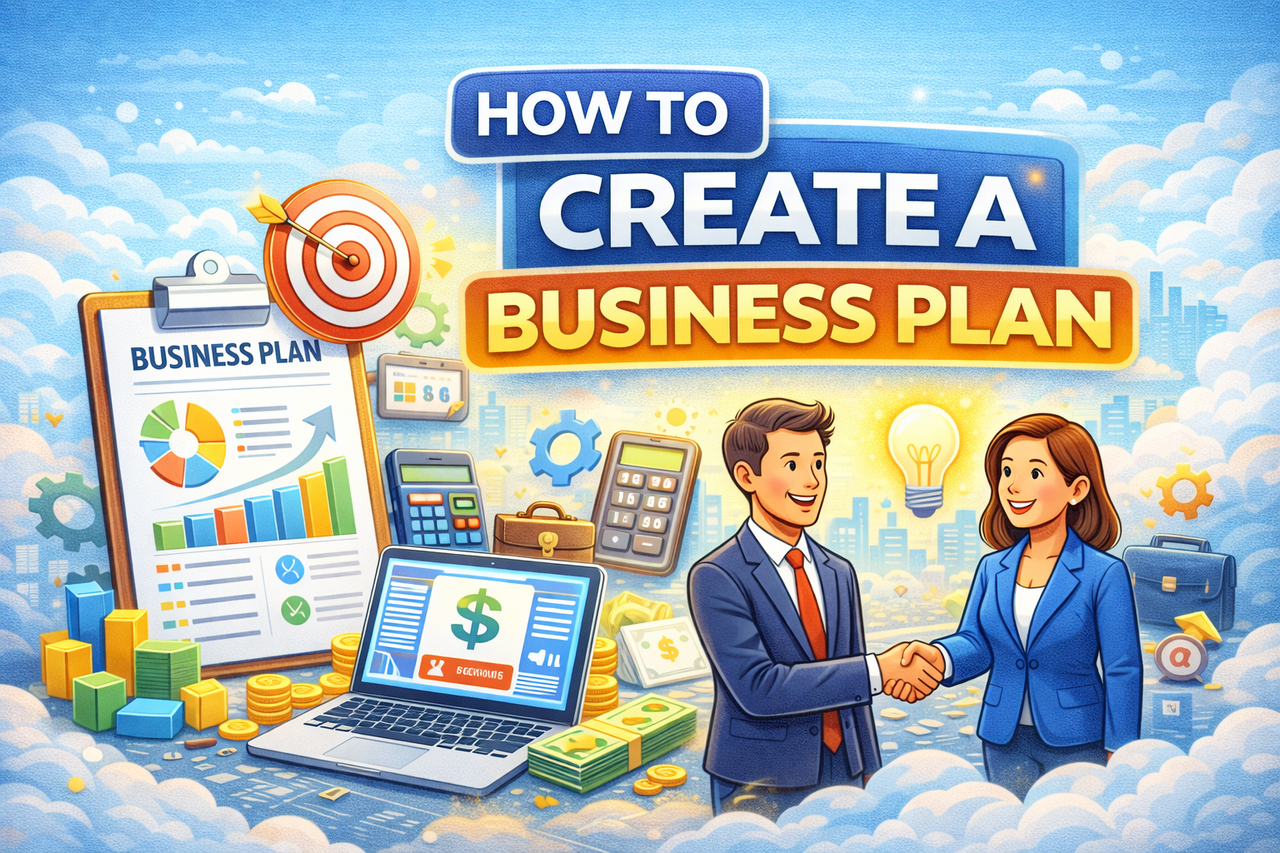
A business plan is one of the most important tools for launching and growing a successful business.
Whether you’re starting a small business, a startup, or a side hustle, a clear business plan gives direction and reduces risk.
It helps you understand your market, customers, competitors, and financial needs.
A good business plan also convinces investors, loan providers, and partners to trust your idea.
In this guide, you’ll learn how to create a business plan step by step, explained in simple, conversational English.
Table of Contents
-
What Is a Business Plan?
-
Why a Business Plan Is Important
-
Key Components of a Business Plan
-
Step-by-Step Guide to Create a Business Plan
-
Business Plan Examples
-
Common Mistakes to Avoid
-
Key Takeaways
-
FAQs
-
Conclusion
1. What Is a Business Plan?
A business plan is a written document that explains your business goals and how you will achieve them.
It includes your products, target customers, marketing strategy, financial projections, and long-term plans.
Think of it as the roadmap for your business.
Simple Example
If your business goal is to launch a café, your business plan explains:
-
Who your customers are
-
What makes your café unique
-
How much money you need
-
Expected monthly profit
-
Marketing strategy
2. Why a Business Plan Is Important
A business plan provides clarity and structure.
Without it, you may struggle to make decisions or measure progress.
Benefits
-
Helps secure funding
-
Defines goals and strategy
-
Reduces risks
-
Guides daily decision-making
-
Helps forecast profit and expenses
-
Makes your business look professional
Example
Banks and investors always ask for a business plan before giving money.
3. Key Components of a Business Plan
Below are the essential parts every business plan must include.
3.1 Executive Summary
A short overview of the entire plan.
Write it last, but place it first.
Includes
-
Business idea
-
Mission
-
Product/service
-
Financial summary
-
Goals
3.2 Business Description
Explains what your business does and what problem it solves.
Example
A food delivery startup helps busy people get healthy meals quickly.
3.3 Market Research
Shows you understand your industry.
Include
-
Target audience
-
Market size
-
Competitors
-
Trends
-
Customer problems
3.4 Products or Services
Describe what you're selling.
Explain
-
Features
-
Benefits
-
Pricing
-
Why customers need it
3.5 Business Model
How your business will make money.
Examples
-
Selling products
-
Subscription model
-
Advertising
-
Commission
3.6 Marketing Strategy
Plan to attract and convert customers.
Include
-
Social media marketing
-
Paid ads
-
SEO
-
Offline promotion
-
Influencer collaborations
3.7 Operations Plan
Explains how your business works internally.
Includes
-
Daily workflow
-
Suppliers
-
Tools
-
Team responsibilities
3.8 Financial Plan
This section is important for investors.
Includes
-
Startup cost
-
Monthly expenses
-
Revenue forecast
-
Break-even analysis
-
Profit projections
4. Step-by-Step Guide to Create a Business Plan
Now let's create a practical business plan in simple steps.
Step 1: Define Your Business Idea
Start with clarity on what you want to build.
Ask yourself
-
What problem am I solving?
-
Who will buy my product?
-
Why will they choose me over competitors?
Example
Business idea: Launching a fitness app for beginners.
Step 2: Identify Your Target Audience
Your business must solve real problems for real people.
Define
-
Age group
-
Gender
-
Location
-
Interests
-
Spending habits
Example
Target audience: 18–35-year-olds wanting simple home workouts.
Step 3: Conduct Market Research
You must know the market before entering it.
Research areas
-
Competitors’ strengths and weaknesses
-
Price range in the market
-
Customer pain points
-
Market demand
Tools
-
Google Trends
-
Social media
-
Competitor websites
-
Surveys
Step 4: Define Your Unique Selling Proposition (USP)
USP explains what makes your business special.
Example
USP for fitness app:
-
Daily personalized workout plans
-
No equipment needed
-
Beginner-friendly
Step 5: Create Your Business Model
Decide how your business will generate revenue.
Examples
-
Subscription charges
-
One-time purchases
-
Affiliate marketing
-
Ads
Step 6: Build Your Marketing Plan
Marketing connects your product to customers.
Include
-
Social media plan
-
Paid ads strategy
-
SEO
-
Email marketing
-
Referral program
Example
Use Instagram reels + YouTube fitness shorts to attract users.
Step 7: Create an Operations Plan
Explain how your business will run daily.
Cover
-
Team roles
-
Tools/software
-
Suppliers
-
Delivery process (if products)
Example
Online business operations:
-
Content creator
-
Website manager
-
Customer support
Step 8: Build Your Financial Plan
Your financial plan shows whether the business is profitable.
Include
-
Startup costs
-
Fixed expenses
-
Variable expenses
-
Revenue projection
-
Profit estimate
Example
Startup cost for a website:
-
Domain: ₹800
-
Hosting: ₹2000
-
Tools: ₹1000
Total: ₹3800
Step 9: Write the Executive Summary
Write this last after completing the full plan.
It should be short and highlighted.
Include
-
What your business does
-
Target audience
-
Why it will succeed
-
Funding requirement
-
1-year goals
5. Business Plan Examples
Example 1: Café
-
Problem → People want clean, affordable, fast café food
-
Solution → Healthy meals + peaceful workspace
-
Target → Students & office workers
-
USP → Healthy food at budget pricing
-
Revenue → Food sales + membership desks
Example 2: Online Fitness Program
-
Problem → Beginners don’t know how to work out at home
-
Solution → Simple 10-minute daily exercises
-
Target → Young adults
-
Revenue → Subscription + ebooks
Example 3: Ecommerce Store
-
Problem → Lack of unique home décor items
-
Solution → Handmade décor products
-
Target → Homeowners & interior lovers
-
Revenue → Product sales
6. Common Mistakes to Avoid
1. Not having a clear niche
Trying to target everyone leads to weak strategy.
2. No financial planning
Without numbers, profits cannot be measured.
3. Copying competitors
Your business needs a unique angle.
4. Unrealistic expectations
Growth takes time and consistent effort.
5. Ignoring marketing
Even great products need promotion.
Key Takeaways
-
A business plan provides direction and clarity.
-
Include market research, marketing, financials, and business model.
-
Understand your target audience deeply.
-
A clear USP makes your business stand out.
-
A strong financial plan helps attract investors.
FAQs
1. What is a business plan in simple words?
A business plan is a roadmap that explains your business goals and how you will achieve them.
It includes your product, customers, marketing, and financial strategy.
2. Do I need a business plan for a small business?
Yes.
Even a small business needs clarity about goals, budget, and customers.
A business plan helps you stay focused.
3. How long should a business plan be?
Typically 8–20 pages.
It should be clear and meaningful — not unnecessarily long.
4. Can I create a business plan without financial knowledge?
Yes.
Start with simple calculations: cost, profit, and estimated sales.
You can also use free financial templates.
5. Is a business plan required for funding?
Absolutely.
Investors and banks need your business plan to understand your vision and potential profit.
Conclusion
Creating a business plan is not complicated when you break it into small, clear steps.
With a strong business idea, market research, financial planning, and a clear USP, your business gets the foundation it needs to grow.
A good business plan helps you avoid mistakes, save time, and move forward with confidence.
Whether you're starting a startup or a small business, a solid plan increases your chances of success.
Start writing your business plan today — your future business will thank you!
What's Your Reaction?