




Social Media Marketing Basics Explained (2025 Guide)
Learn social media marketing basics in simple words. Understand strategy, content creation, platforms, analytics, and beginner-friendly marketing tips.
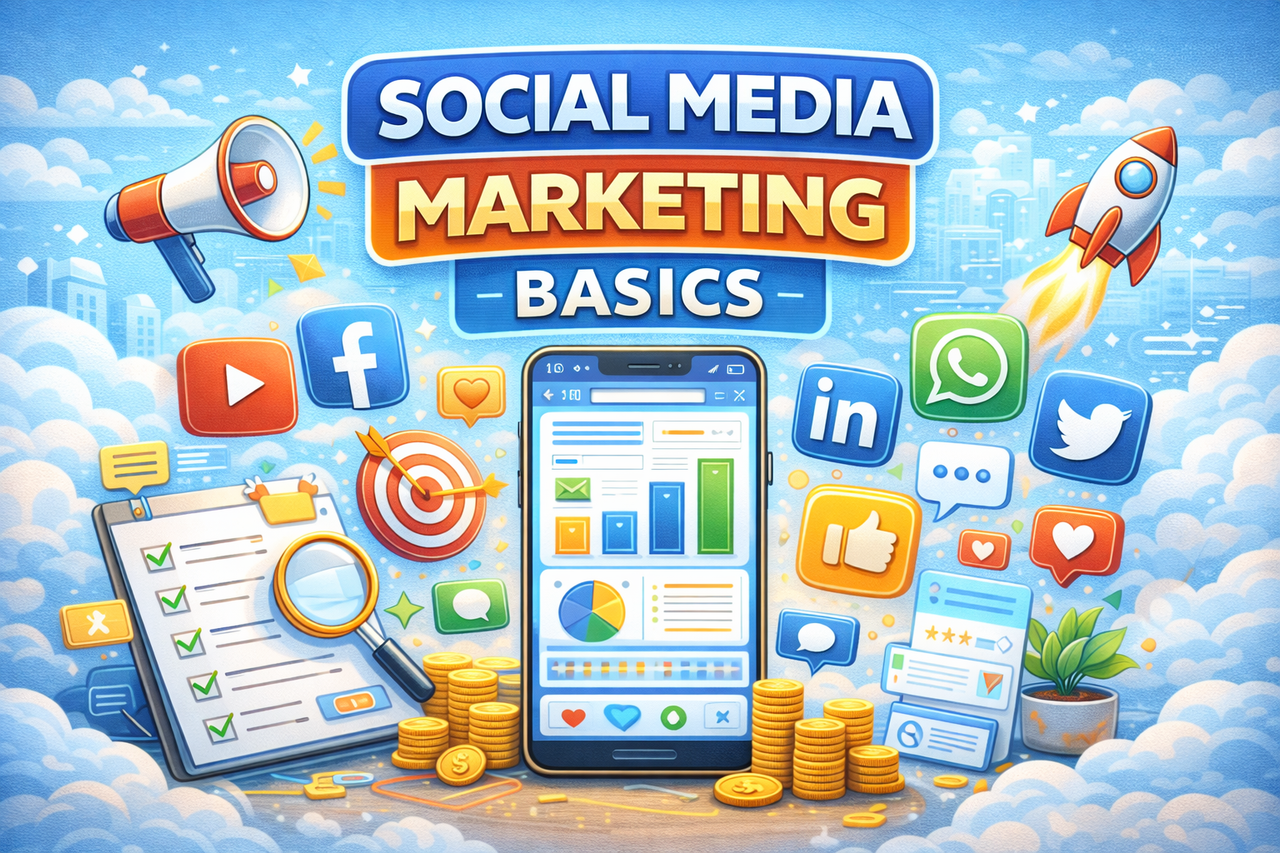
Social Media Marketing Basics
Introduction
Social media marketing has become one of the most effective ways to grow a brand, attract customers, and build trust online.
Whether you are a business owner, a content creator, or a beginner learning digital marketing, understanding social media marketing is essential.
With billions of users across platforms like Facebook, Instagram, YouTube, LinkedIn, and X (Twitter), the opportunities are huge.
But beginners often feel confused about where to start, what to post, and how to build a strategy.
This guide explains the basics of social media marketing in simple, easy-to-understand language so you can get started confidently.
Table of Contents
-
What Is Social Media Marketing?
-
Why Social Media Marketing Matters
-
Major Social Media Platforms
-
How Social Media Marketing Works
-
Creating a Social Media Strategy
-
Content Planning & Creation
-
Social Media Advertising Basics
-
Tracking Performance & Analytics
-
Common Mistakes Beginners Make
-
Key Takeaways
-
FAQs
-
Conclusion
1. What Is Social Media Marketing?
Social media marketing (SMM) means promoting your products, services, or content on social media platforms to grow your audience and increase sales.
It includes content creation, posting, advertising, engaging with followers, and analyzing results.
Simple Example
A small business posts product photos on Instagram → people like, share, follow → some buy the product → this is social media marketing.
2. Why Social Media Marketing Matters
Social media is powerful because it connects brands directly with customers.
Benefits
-
Builds brand awareness
-
Drives website traffic
-
Helps in lead generation
-
Improves customer trust
-
Allows direct communication
-
Supports SEO through brand searches
Example
A restaurant posts reels of food preparation and gets thousands of local followers → more walk-in customers.
3. Major Social Media Platforms
Every platform has its unique purpose. Knowing the right one helps you create better content.
3.1 Facebook
Great for local businesses, communities, and ads.
Best for adults (25–45 age group).
Content Type
-
Posts
-
Reels
-
Ads
-
Groups
3.2 Instagram
Perfect for visual content and branding.
Popular among young audiences.
Content Type
-
Reels
-
Stories
-
Carousels
-
Photos
3.3 YouTube
Best for long-form educational and entertainment videos.
Content Type
-
Tutorials
-
Reviews
-
Storytelling
-
Vlogs
3.4 LinkedIn
Professional networking platform.
Best for B2B marketing.
Content Type
-
Career tips
-
Industry insights
-
Business updates
3.5 X (Twitter)
Useful for fast updates, opinions, and trending topics.
3.6 Pinterest
Great for bloggers, DIY, fashion, cooking, and home décor.
4. How Social Media Marketing Works
The basics are simple:
Create content → Post it → Attract users → Build engagement → Convert into customers.
Main Components
-
Content creation
-
Posting schedule
-
Engaging with audience
-
Hashtags
-
Ads
-
Analytics
Example Flow
A fitness coach posts a workout reel → gets views → followers ask questions → he offers a paid training program.
5. Creating a Social Media Strategy
A solid strategy is the foundation of social media success.
5.1 Define Your Goal
Your goals decide your content type.
Examples
-
Increase followers
-
Get more website visits
-
Generate leads
-
Improve brand visibility
-
Sell products
5.2 Identify Your Target Audience
Understand who you are posting for.
Ask:
-
Age?
-
Interests?
-
Problems?
-
Location?
5.3 Choose the Right Platforms
Every business doesn’t need every platform.
Examples
-
Fashion brand → Instagram
-
SaaS business → LinkedIn
-
Education → YouTube
5.4 Competitor Research
Study competitors to understand trends, content types, and engagement.
5.5 Plan a Posting Schedule
Consistency builds trust and visibility.
Example Schedule
-
Instagram: 3–4 posts per week
-
YouTube: 1 video per week
-
LinkedIn: 2 posts per week
6. Content Planning & Creation
Content is the heart of social media marketing.
6.1 Types of Content
-
Reels
-
Carousels
-
Stories
-
Quotes
-
Memes
-
Tutorials
-
Infographics
-
Giveaways
-
Live sessions
6.2 The 80/20 Rule
80% helpful content
20% promotional content
Example
Teach SEO tips 80% of the time
Promote your course 20% of the time
6.3 Storytelling Works Best
People connect with stories more than advertisements.
Example
Instead of saying “Buy this product,” explain how it solved a customer’s problem.
6.4 Hashtags
Use relevant hashtags to reach a bigger audience.
Types of Hashtags
-
Niche hashtags (#digitalmarketingtips)
-
Trending hashtags (#MondayMotivation)
-
Brand hashtags
7. Social Media Advertising Basics
Ads help reach more people quickly.
7.1 Types of Social Media Ads
-
Image ads
-
Video ads
-
Carousel ads
-
Lead form ads
-
Story ads
7.2 Platforms for Ads
-
Facebook Ads Manager
-
Instagram Ads
-
YouTube Ads
-
LinkedIn Ads
-
Pinterest Ads
7.3 Benefits of Paid Ads
-
Faster results
-
Targeted audience
-
High conversions
Example
A small business runs Instagram ads for a new product and gets 200+ orders in 3 days.
8. Tracking Performance & Analytics
Understanding data helps improve your marketing strategy.
8.1 Key Metrics to Track
-
Reach
-
Impressions
-
Engagement
-
Click-through rate (CTR)
-
Followers gained
-
Website visits
-
Sales conversions
8.2 Tools for Analytics
-
Meta Business Suite
-
YouTube Studio
-
Google Analytics
-
LinkedIn Insights
-
SocialPilot / Buffer
Analytics show what works and what needs improvement.
9. Common Mistakes Beginners Make
1. Posting without strategy
Random posts don’t grow accounts.
2. Buying followers
Fake followers reduce engagement.
3. Ignoring analytics
Data helps improve.
4. Posting too much promotional content
People want value, not ads.
5. Not engaging with followers
Replying increases trust and visibility.
Key Takeaways
-
Social media marketing helps businesses grow authentically.
-
Choosing the right platform is essential.
-
Content strategy + consistency = success.
-
Paid ads boost visibility and conversions faster.
-
Analytics help you continuously improve.
FAQs
1. What is social media marketing in simple words?
Social media marketing means using platforms like Facebook, Instagram, and YouTube to promote content, attract customers, and grow your brand.
2. Can beginners learn social media marketing?
Yes, beginners can easily learn it.
Start with one platform, post consistently, and understand what your audience likes.
3. How often should I post on social media?
3–4 times a week is enough for beginners.
Consistency matters more than posting daily.
4. Is paid advertising necessary?
Not always.
You can grow organically, but ads help you reach more people quickly.
5. What type of content works best?
Short videos (reels), helpful tips, carousels, and relatable posts work best in today’s social media environment.
Conclusion
Social media marketing is one of the most effective and affordable ways to grow any brand online.
With the right strategy, platform selection, and consistent content creation, anyone can build a strong social presence.
Whether you're a beginner or an experienced marketer, understanding the basics helps you create meaningful results.
Remember — social media rewards creativity, authenticity, and consistency.
Start small, stay consistent, and watch your online presence grow.
What's Your Reaction?