







What Is a Startup? Complete Beginner Guide
Learn what a startup is, how it works, types of startups, funding options, challenges, and skills needed in this complete beginner guide.
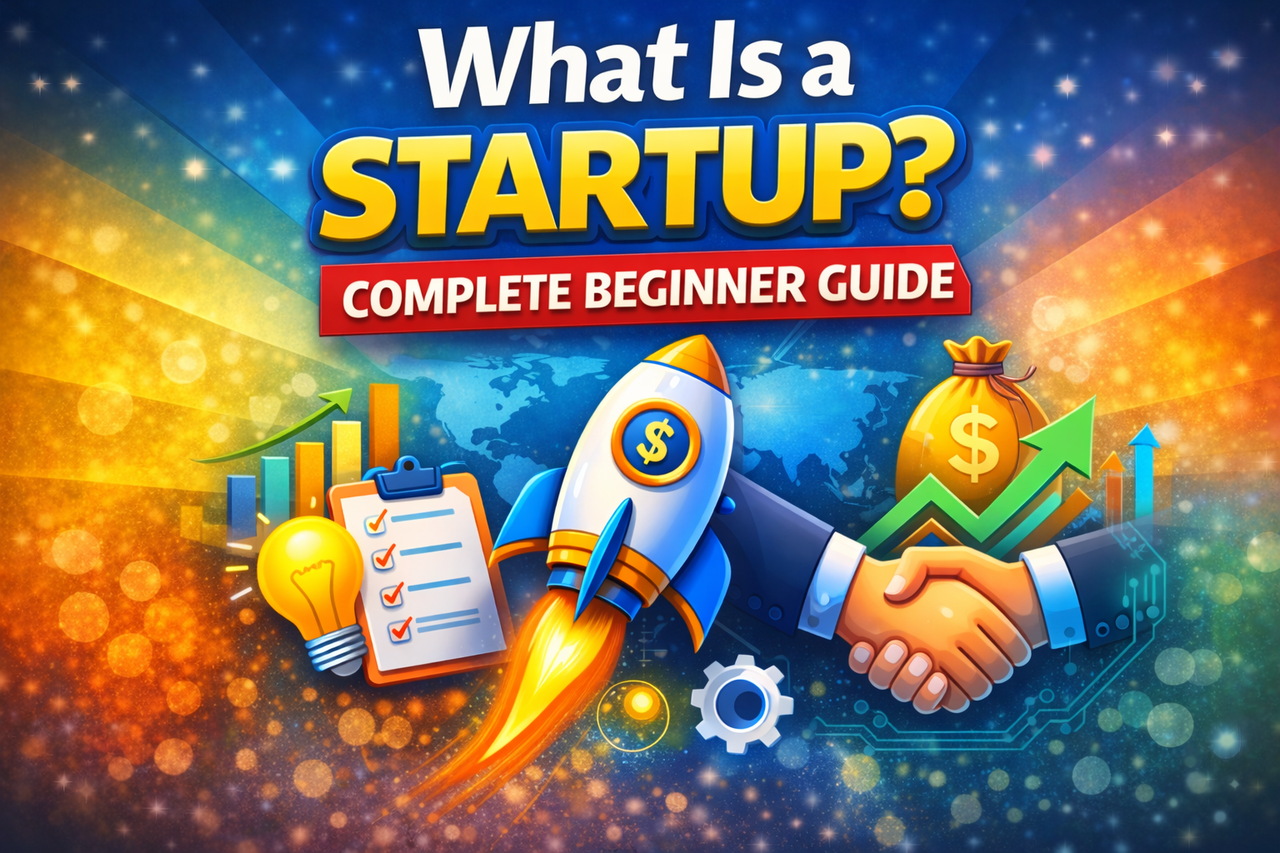
What Is a Startup? Complete Guide
Introduction
The word “startup” is used everywhere today, from business news to social media.
Many people think startups are just small companies, but that’s not completely true.
A startup is more about innovation, growth, and solving problems in new ways.
If you are a beginner, the startup world may feel exciting yet confusing.
This complete guide will explain what a startup really is, in simple language.
Table of Contents
-
What Is a Startup
-
How a Startup Is Different from a Business
-
Types of Startups
-
How Startups Work
-
Key Elements of a Successful Startup
-
Funding Options for Startups
-
Challenges Faced by Startups
-
Startup Life Cycle Explained
-
Skills Needed to Build a Startup
-
Future of Startups
What Is a Startup
A startup is a young company created to solve a specific problem using innovative ideas.
Simple Definition
A startup is a business designed to grow fast by offering a new or better solution.
Real-Life Example
Companies like Uber, Airbnb, and Zoom started as startups.
They solved everyday problems using technology and scalable models.
How a Startup Is Different from a Business
Not every new business is a startup.
Traditional Business
-
Focuses on steady income
-
Limited growth
-
Local or regional operations
Startup Business
-
Focuses on rapid growth
-
Uses innovation and technology
-
Targets large or global markets
A startup aims to scale quickly, while a business aims for stability.
Types of Startups
Startups come in different forms depending on their goals and industries.
Technology Startups
These startups build software, apps, or tech platforms.
Service-Based Startups
They offer services like digital marketing, consulting, or freelancing platforms.
E-commerce Startups
These startups sell products online using websites or mobile apps.
Social Startups
Focused on solving social or environmental problems while earning revenue.
How Startups Work
Startups operate differently from traditional companies.
Problem Identification
Every startup begins by identifying a real problem.
Solution Development
The startup creates a product or service to solve that problem.
Testing and Feedback
Startups test ideas, collect feedback, and improve continuously.
Scaling the Business
Once the idea works, startups focus on rapid growth and expansion.
Key Elements of a Successful Startup
Some core elements define startup success.
Strong Idea
The idea should solve a real and meaningful problem.
Right Team
A passionate and skilled team is essential for growth.
Market Demand
There must be enough people willing to use and pay for the solution.
Execution
Even a great idea fails without proper execution.
Funding Options for Startups
Funding helps startups grow faster.
Bootstrapping
Founders use their own savings to start the business.
Angel Investors
Individuals who invest money in early-stage startups.
Venture Capital
Firms that invest large amounts in high-growth startups.
Crowdfunding
Raising money from the public through online platforms.
Each funding option has its own risks and benefits.
Challenges Faced by Startups
Startup life is exciting but challenging.
Common Challenges
-
Limited funds
-
Market competition
-
Team management
-
Product-market fit
-
Customer acquisition
Many startups fail due to poor planning or lack of demand.
Startup Life Cycle Explained
Startups go through different stages.
Idea Stage
Only an idea exists, with basic research.
Early Stage
Product development and early users.
Growth Stage
Rapid user growth and revenue increase.
Expansion Stage
Entering new markets and scaling operations.
Understanding the life cycle helps in better planning.
Skills Needed to Build a Startup
Founders need multiple skills.
Important Skills
-
Problem-solving
-
Leadership
-
Marketing and sales
-
Financial management
-
Adaptability
Learning continuously is key in the startup journey.
Future of Startups
The startup ecosystem is growing worldwide.
Key Trends
-
AI-based startups
-
Remote-first companies
-
Sustainable businesses
-
Digital-first solutions
Startups will continue to shape the future economy.
Key Takeaways
-
A startup focuses on innovation and growth
-
Not all businesses are startups
-
Funding helps startups scale faster
-
Challenges are part of the journey
-
Skills and execution matter most
FAQs
1. Is every new business a startup?
No, not every new business is a startup.
A startup focuses on innovation and rapid growth.
Traditional businesses focus on stability.
2. Can one person start a startup?
Yes, many startups begin with a single founder.
However, having a team helps in scaling faster.
Skills and dedication matter more than team size.
3. Do startups always need funding?
No, funding is not mandatory.
Many startups begin with bootstrapping.
Funding helps in faster growth, not survival.
4. Why do most startups fail?
Common reasons include lack of market demand and poor planning.
Running out of money is another major cause.
Learning from mistakes improves success chances.
5. Are startups risky?
Yes, startups involve high risk.
But they also offer high rewards.
Smart planning reduces risk significantly.
Conclusion
A startup is more than just a new company.
It represents innovation, risk-taking, and problem-solving.
While the journey is challenging, it is also rewarding.
Anyone with the right mindset can start a startup.
With patience and execution, startups can create big impact.
What's Your Reaction?